San Diego's Little Italy has Become a Little Smaller
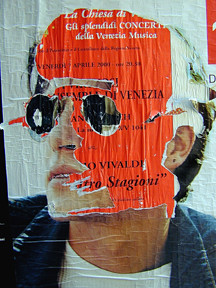
I am walking around Naples, my hometown, if I still have one after years of living abroad in a series of different cities. I have now lived longer place that I consider temporary than where I consider myself to be rooted culturally, spiritually, historically. As I walk around the streets of the city that Walter Benjamin defined as “porous” everything speaks to me. The monument to the Nile and its tributaries in the small piazza known as ‘o cuorp’ ‘e Napule (the body of Naples); the small shrine to Maradona, who led the Naples soccer team to national titles in the 1980s; the smell of cooking that winds its way along the tight streets and alleys at certain times of the day; and the juxtaposition of old and new, ancient and contemporary that continually catches the eyes of everyone who moves within this urban space. The walls manifest a running commentary on the social and political situation of the city. The walls form part of this population’s expressive culture. The graffiti is layered and never ending. Declarations of love: “LAURA, TI AMO!” Political statements: “BERLUSCA E’ LA MUCCA PAZZA!” Public Notices: “THE GOVERNMENT HAS GONE OUT OF BUSINESS!”
Much of what I learned about life, and much of what I still take with me as a guidebook to the world, I learned in the streets of Naples. This is an educational process that continues still. Chist’e’ ‘o paese dd’o sole, chist’e’ ‘o paese dd’o mare. “This is the city of sun, this is the city of the sea says the song”, and this city of the sun continues to educate its population through itself, its streets and walls and sidewalks and churches. This is a street culture, a communal throbbing living pulsating culture. Nothing is private except what one carries within. All surfaces, attitudes and behaviors are available for reading and interpretation. All are absorbed into the city’s and population’s cultural mass. The medium is, in fact, the message and, much like a medium, it channels communication and information through all of its constituents.
This, of course, is an experience that is not unique to me and Naples. Any one of us has a similar experience of their own. The very basic relationship between an environment and its inhabitants is at the heart of everything that defines Italian culture. Italian design, architecture, music, theatre and social life is both a result of, and an influence on, its lived/living spaces. Go back to Tommaso Campanella’s City of the Sun and you’ll see what I mean.
Recognized as a leading force in southern Italian popular resistance, the dominican Tommaso Campanella’s self-appointed task was to rid the world of “three evils: tyranny, sofisms and hypocricy.” His struggle to rid the south, and especially Calabria, of foreign domination, made of him an activist. For this he was imprisoned by the Spaniards, who extorted a confession through continuous torture. During the more than twenty year of prison he wrote a number of books, among which was The City of the Sun. This masterpiece is a work that not only proposes an approach to cultural pedagogy but closely links it to a visual and social environment that is the city.
The City’s is made up of a spiraling set of seven walls that bear representations of all the world’s “things. The function of the walls in Campanella’s city is pedagogical. Education begins at the age of three and continues for the rest of one’s life. The city is itself a repository and an instrument of knowledge. Living in the city of the Sun means being exposed to all of nature’s bounty incessantly and gaining the knowledge necessary for a holistic existence by which man is defined to be an integral component of the earth and the universe. The interesting aspect of this type of education is that it is highly dependent on the visual as a first mode of acquisition and interpretation. The walls and all the environment of the City of the Sun, of any city, institute a dialogue that functions to inform and conform human discourse within a historically based dialogue. What is to be the outcome of all this? A humanness that is integrated into the natural world as just one more interactive component.
So, what does all this have to do with us here and now? Everything! Because as Italians tend to do, we recreate our spaces abroad to reflect what we know and what we are. And because here in San Diego, as I walk around Little Italy I get to thinking of a calabrese, Italo Scanga, who used to live in San Diego, and wonder what he might think of the changes we see here. Scanga's paintings, sculptures and drawings express the silence of the culturally marginal context from which Scanga's work emanates.
His work stands for the language of Italy's South, the dialects, the culture that is tied up in those languages, the expression that is silenced and must therefore find an alternative way to refer to itself. Italo Scanga's work represents not only the depicted landscapes or object s but the culture and language that has grown from them.
Italo Scanga's work taps into Campanella specifically and all of Italian culture more generally. His work reflects both a memory of the past, which he tries to recall and reconstruct, and a memory in progress. The latter is a necessary product of working at a distance from one's culture. Lacking direct access to the past, our future depends on memory, and memory is always a constructed personal language. Fortunately, this personal language speaks of one's ties to culture, in Scanga's case both Italian and American culture. Viewing Scanga's drawings is like walking along the walls of Campanella's city. From them we, the viewers, learn of the existence of a particular world, a particular vision, and a particular memory that could well be incorporated into our own. After all, Scanga's objects are our objects, only the grammar of their description differs. In this artist's work, we find an invitation to share languages, to reach across that space and communicate through elements of commonality.
Italo Scanga finds in Campanella a vehicle by which he is able to cross cultures and, while he speaks his vernacular languange of recollection, he taps into a new geographic, linguistic and cultural reality that asks its viewers to question his or her own cultural (dis)placement in a similar manner.
I am walking around the streets of San Diego’s Little Italy and I strain to remember the place as it was only a couple of years back. Where is the local memory and local knowledge? Where do we recognize the heritage of Little Italy? Who has taken care of preserving the signs of the history of this place? What distinguishes it now from other “renovated” urban scapes? I remember the excitement a few years back surrounding the future prospect of redeveloping the neighborhood. My work was sponsored by the California Council for the Humanities through their Neighborhoods Project and then local director Ralph Lewin. A KPBS documentary on Little Italy came out of that work. Little Italy was everywhere. It was to be an example. And I remember saying in that documentary that to ensure a successful reconstitution of the area attention should be paid to economic, commercial and cultural elements. Something has happened that has negated the last element, not only in cultural events in the present but by erasing the past. Development depends on co-development. In order for development to trace a progressively successful and constant path it must create and environment for diversification and differentiation. Without taking an active interest and part in creating the right environment for co-development in a variety of fields including the cultural, development will flourish in the short term but prove to be destructive in the long term.
Look along India Street, yes, there are banners of famous Italians and Italian Americans flapping in the wind, and yes, there is the new Piazza Basilone (a travesty and insult to any sense of Italian design and architecture all in itself), but is there any sense of a local history? Who are the local heroes? There are many who should be remembered and celebrated who made this community: fishermen, businessmen, housewives, developers, shop-keepers, priests and lay people who made Our Lady of the Rosary a reality, the leaders and organizers of the various local associations and church groups. Who were/are these people? Where are they celebrated? Why are they not on the banners? Why is Italo Scanga’s work missing from Little Italy? Where are we? We don’t have to look elsewhere for individuals who have contributed to Italian American history and culture. All we need to do is look at our mothers and fathers, our neighbors, colleagues and co-workers.
This is not meant to be a criticism of development. Development is necessary. But development that literally bulldozes over history without considering what it is crushing is a shame. A neighborhood without history is little more than an amusement park. Is Little Italy going to be a parody of itself as some Disney-like imaginary land? This neighbourhood is being hailed as a trend-setter and example for urban development, but what have we overlooked in the equation? Even though it may not seem like it to some of you, it’s not too late. There is still much work to do to gather and preserve our heritage, most of it in the home. Collect , organize and preserve your family histories. Interview your elders today, tomorrow may be too late. In order to prevent Little Italy from becoming merely a marketing ploy, an empty and meaningless name, to keep it from being reduced to a sign over what could be any street in any part of town, pressure your representatives, local and otherwise, to work to ensure the preservation of what is left of our culture and history.
Pasquale Verdicchio
I am walking around Naples, my hometown, if I still have one after years of living abroad in a series of different cities. I have now lived longer place that I consider temporary than where I consider myself to be rooted culturally, spiritually, historically. As I walk around the streets of the city that Walter Benjamin defined as “porous” everything speaks to me. The monument to the Nile and its tributaries in the small piazza known as ‘o cuorp’ ‘e Napule (the body of Naples); the small shrine to Maradona, who led the Naples soccer team to national titles in the 1980s; the smell of cooking that winds its way along the tight streets and alleys at certain times of the day; and the juxtaposition of old and new, ancient and contemporary that continually catches the eyes of everyone who moves within this urban space. The walls manifest a running commentary on the social and political situation of the city. The walls form part of this population’s expressive culture. The graffiti is layered and never ending. Declarations of love: “LAURA, TI AMO!” Political statements: “BERLUSCA E’ LA MUCCA PAZZA!” Public Notices: “THE GOVERNMENT HAS GONE OUT OF BUSINESS!”
Much of what I learned about life, and much of what I still take with me as a guidebook to the world, I learned in the streets of Naples. This is an educational process that continues still. Chist’e’ ‘o paese dd’o sole, chist’e’ ‘o paese dd’o mare. “This is the city of sun, this is the city of the sea says the song”, and this city of the sun continues to educate its population through itself, its streets and walls and sidewalks and churches. This is a street culture, a communal throbbing living pulsating culture. Nothing is private except what one carries within. All surfaces, attitudes and behaviors are available for reading and interpretation. All are absorbed into the city’s and population’s cultural mass. The medium is, in fact, the message and, much like a medium, it channels communication and information through all of its constituents.
This, of course, is an experience that is not unique to me and Naples. Any one of us has a similar experience of their own. The very basic relationship between an environment and its inhabitants is at the heart of everything that defines Italian culture. Italian design, architecture, music, theatre and social life is both a result of, and an influence on, its lived/living spaces. Go back to Tommaso Campanella’s City of the Sun and you’ll see what I mean.
Recognized as a leading force in southern Italian popular resistance, the dominican Tommaso Campanella’s self-appointed task was to rid the world of “three evils: tyranny, sofisms and hypocricy.” His struggle to rid the south, and especially Calabria, of foreign domination, made of him an activist. For this he was imprisoned by the Spaniards, who extorted a confession through continuous torture. During the more than twenty year of prison he wrote a number of books, among which was The City of the Sun. This masterpiece is a work that not only proposes an approach to cultural pedagogy but closely links it to a visual and social environment that is the city.
The City’s is made up of a spiraling set of seven walls that bear representations of all the world’s “things. The function of the walls in Campanella’s city is pedagogical. Education begins at the age of three and continues for the rest of one’s life. The city is itself a repository and an instrument of knowledge. Living in the city of the Sun means being exposed to all of nature’s bounty incessantly and gaining the knowledge necessary for a holistic existence by which man is defined to be an integral component of the earth and the universe. The interesting aspect of this type of education is that it is highly dependent on the visual as a first mode of acquisition and interpretation. The walls and all the environment of the City of the Sun, of any city, institute a dialogue that functions to inform and conform human discourse within a historically based dialogue. What is to be the outcome of all this? A humanness that is integrated into the natural world as just one more interactive component.
So, what does all this have to do with us here and now? Everything! Because as Italians tend to do, we recreate our spaces abroad to reflect what we know and what we are. And because here in San Diego, as I walk around Little Italy I get to thinking of a calabrese, Italo Scanga, who used to live in San Diego, and wonder what he might think of the changes we see here. Scanga's paintings, sculptures and drawings express the silence of the culturally marginal context from which Scanga's work emanates.
His work stands for the language of Italy's South, the dialects, the culture that is tied up in those languages, the expression that is silenced and must therefore find an alternative way to refer to itself. Italo Scanga's work represents not only the depicted landscapes or object s but the culture and language that has grown from them.
Italo Scanga's work taps into Campanella specifically and all of Italian culture more generally. His work reflects both a memory of the past, which he tries to recall and reconstruct, and a memory in progress. The latter is a necessary product of working at a distance from one's culture. Lacking direct access to the past, our future depends on memory, and memory is always a constructed personal language. Fortunately, this personal language speaks of one's ties to culture, in Scanga's case both Italian and American culture. Viewing Scanga's drawings is like walking along the walls of Campanella's city. From them we, the viewers, learn of the existence of a particular world, a particular vision, and a particular memory that could well be incorporated into our own. After all, Scanga's objects are our objects, only the grammar of their description differs. In this artist's work, we find an invitation to share languages, to reach across that space and communicate through elements of commonality.
Italo Scanga finds in Campanella a vehicle by which he is able to cross cultures and, while he speaks his vernacular languange of recollection, he taps into a new geographic, linguistic and cultural reality that asks its viewers to question his or her own cultural (dis)placement in a similar manner.
I am walking around the streets of San Diego’s Little Italy and I strain to remember the place as it was only a couple of years back. Where is the local memory and local knowledge? Where do we recognize the heritage of Little Italy? Who has taken care of preserving the signs of the history of this place? What distinguishes it now from other “renovated” urban scapes? I remember the excitement a few years back surrounding the future prospect of redeveloping the neighborhood. My work was sponsored by the California Council for the Humanities through their Neighborhoods Project and then local director Ralph Lewin. A KPBS documentary on Little Italy came out of that work. Little Italy was everywhere. It was to be an example. And I remember saying in that documentary that to ensure a successful reconstitution of the area attention should be paid to economic, commercial and cultural elements. Something has happened that has negated the last element, not only in cultural events in the present but by erasing the past. Development depends on co-development. In order for development to trace a progressively successful and constant path it must create and environment for diversification and differentiation. Without taking an active interest and part in creating the right environment for co-development in a variety of fields including the cultural, development will flourish in the short term but prove to be destructive in the long term.
Look along India Street, yes, there are banners of famous Italians and Italian Americans flapping in the wind, and yes, there is the new Piazza Basilone (a travesty and insult to any sense of Italian design and architecture all in itself), but is there any sense of a local history? Who are the local heroes? There are many who should be remembered and celebrated who made this community: fishermen, businessmen, housewives, developers, shop-keepers, priests and lay people who made Our Lady of the Rosary a reality, the leaders and organizers of the various local associations and church groups. Who were/are these people? Where are they celebrated? Why are they not on the banners? Why is Italo Scanga’s work missing from Little Italy? Where are we? We don’t have to look elsewhere for individuals who have contributed to Italian American history and culture. All we need to do is look at our mothers and fathers, our neighbors, colleagues and co-workers.
This is not meant to be a criticism of development. Development is necessary. But development that literally bulldozes over history without considering what it is crushing is a shame. A neighborhood without history is little more than an amusement park. Is Little Italy going to be a parody of itself as some Disney-like imaginary land? This neighbourhood is being hailed as a trend-setter and example for urban development, but what have we overlooked in the equation? Even though it may not seem like it to some of you, it’s not too late. There is still much work to do to gather and preserve our heritage, most of it in the home. Collect , organize and preserve your family histories. Interview your elders today, tomorrow may be too late. In order to prevent Little Italy from becoming merely a marketing ploy, an empty and meaningless name, to keep it from being reduced to a sign over what could be any street in any part of town, pressure your representatives, local and otherwise, to work to ensure the preservation of what is left of our culture and history.
Pasquale Verdicchio
posted by Pasquale Verdicchio at 3:46 PM


0 Comments:
Post a Comment
<< Home